
What It Is
Drawing and painting are learnable skills of observation rather than mysterious innate talents. Anyone who can write their name has enough hand control to sketch everyday objects, buildings, and landscapes. Starting with pencil and pen teaches you to judge proportions, angles, and light versus shadow. Adding a small box of watercolours or acrylic tubes later lets you capture colour at a kitchen table.
What You Need to Start
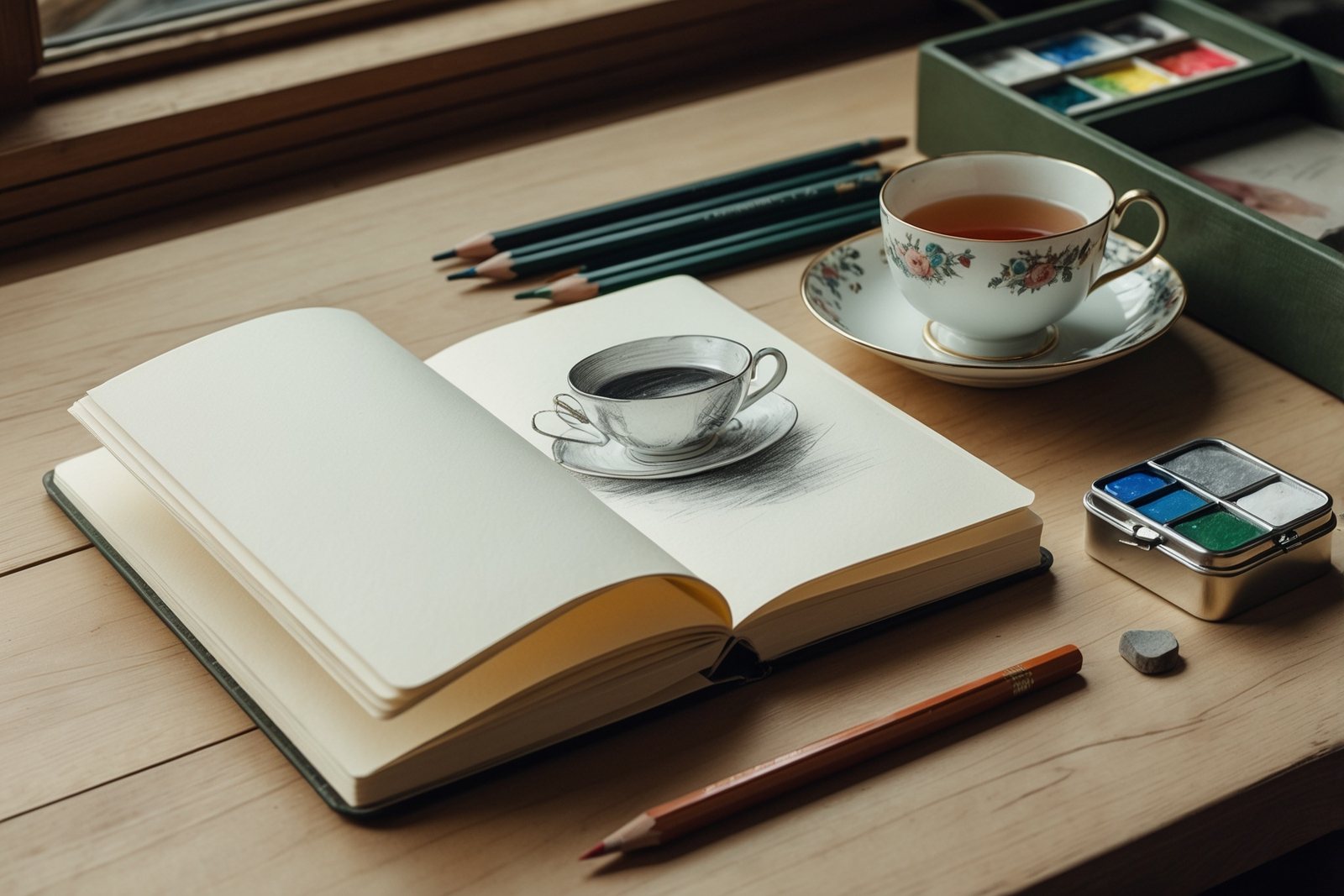
Keep your kit compact so there is no friction when you sit down for half an hour in the evening. Start with an A5 or A4 hardback sketchbook using cartridge paper of at least 140gsm weight. Add three graphite pencils (HB, 2B, and 4B), a soft putty rubber, and a metal pencil sharpener. To try watercolour later, buy a student pocket pan set of twelve colours, a size 8 round brush, and 300gsm watercolour paper.
What It Costs
A complete pencil drawing starter kit (sketchbook, three graded pencils, putty rubber, and sharpener) costs £12 to £22 at a UK art shop. Stepping up to watercolour with a student pocket box, one synthetic brush, and a pad of 300gsm paper adds £35 to £55. Always buy fewer items of reliable student quality rather than large wooden gift boxes filled with chalky, low-pigment paints.
Good First Projects
Draw simple household objects lit by a single desk lamp, such as a ceramic mug, an onion, or an old boot. Practise slow contour drawing — looking mostly at the object rather than the paper — to train your eye and hand together. Once you can shade smooth pencil tones, paint monochrome studies using a single dark watercolour like burnt umber or Payne's grey. Working in one colour teaches water control before you worry about mixing palettes.
Mistakes to Avoid
Painting wet watercolour washes onto thin printer paper or lightweight sketching paper makes the sheet buckle into puddles. Always use heavy 300gsm watercolour paper when working with wet media so the surface dries flat. Another common mistake is drawing symbols of what you think an object looks like rather than observing the real shape. Viewed from the side, the top of a round mug is a narrow ellipse, not a full circle.