
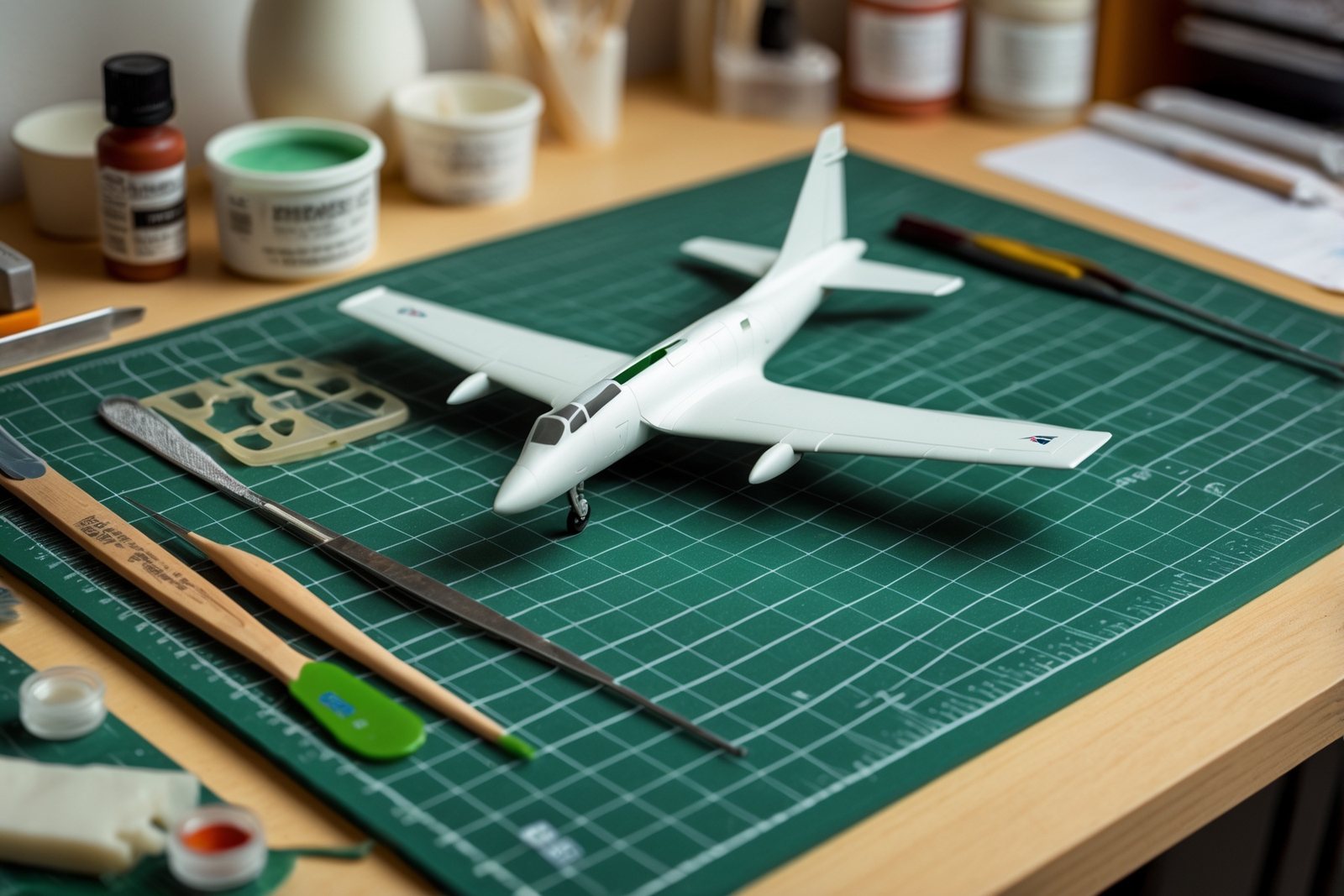
What It Is
Scale model making is an absorbing indoor hobby built for quiet evenings and rainy weekends. Most newcomers begin with injection-moulded plastic kits, architectural card kits, or laser-cut wooden kits. The process combines careful assembly, smoothing tiny seams, brush painting, and applying waterslide transfers. Because everything fits on an A3 cutting mat, you can pack your entire setup into a shallow storage box between sessions.
What You Need to Start
Avoid cutting parts off plastic frames (sprues) with kitchen scissors or twisting them off by hand. Instead, buy an A3 self-healing cutting mat, flush sprue cutters, and a craft knife with spare number 10A blades. Add fine sanding sticks, angled tweezers, and liquid poly cement with a fine needle applicator. For painting, start with three synthetic brushes (sizes 0, 2, and a small flat brush) and water-based acrylic model paints.
What It Costs
A sensible set of basic assembly tools and a cutting mat costs £25 to £45 in the UK. A beginner-friendly 1:72 scale aircraft kit or 1:35 scale vehicle kit typically costs £12 to £25 at model shops. Many manufacturers also sell starter sets that bundle the kit with small pots of acrylic paint, glue, and a brush for £15 to £28. Water-based acrylics clean up with tap water and have very little smell indoors.
Good First Projects
A 1:72 scale single-engine propeller aircraft, such as a Spitfire or Hurricane, has around forty parts and makes a classic first build. The fuselage and wings come together quickly, letting you practise neat seam sanding and two-colour camouflage painting. If you prefer railways or architecture, an OO-gauge (1:76 scale) laser-cut card or wooden signal box kit is another rewarding weekend project with flat parts.
Mistakes to Avoid
Using too much plastic cement is the number one beginner error at the workbench. Liquid cement works by melting the plastic edges together, so an overflowing drop will smudge surface detail and leave fingerprints. Another common mistake is brushing on thick, unthinned paint straight from the pot in one heavy coat. Thin acrylic paint slightly with water and apply two or three light coats so fine panel lines stay crisp.