
What It Is
Birdwatching — often called birding — is a quiet, observant hobby that works anywhere from a kitchen window to a coastal reserve. Once you notice the difference between a dunnock and a house sparrow, every walk outdoors becomes much more interesting. Listening for woodland songbirds and watching seasonal migrants connects you directly with the rhythm of the British year. You can do it for ten minutes over morning coffee or spend a whole Saturday exploring a wetland.
What You Need to Start
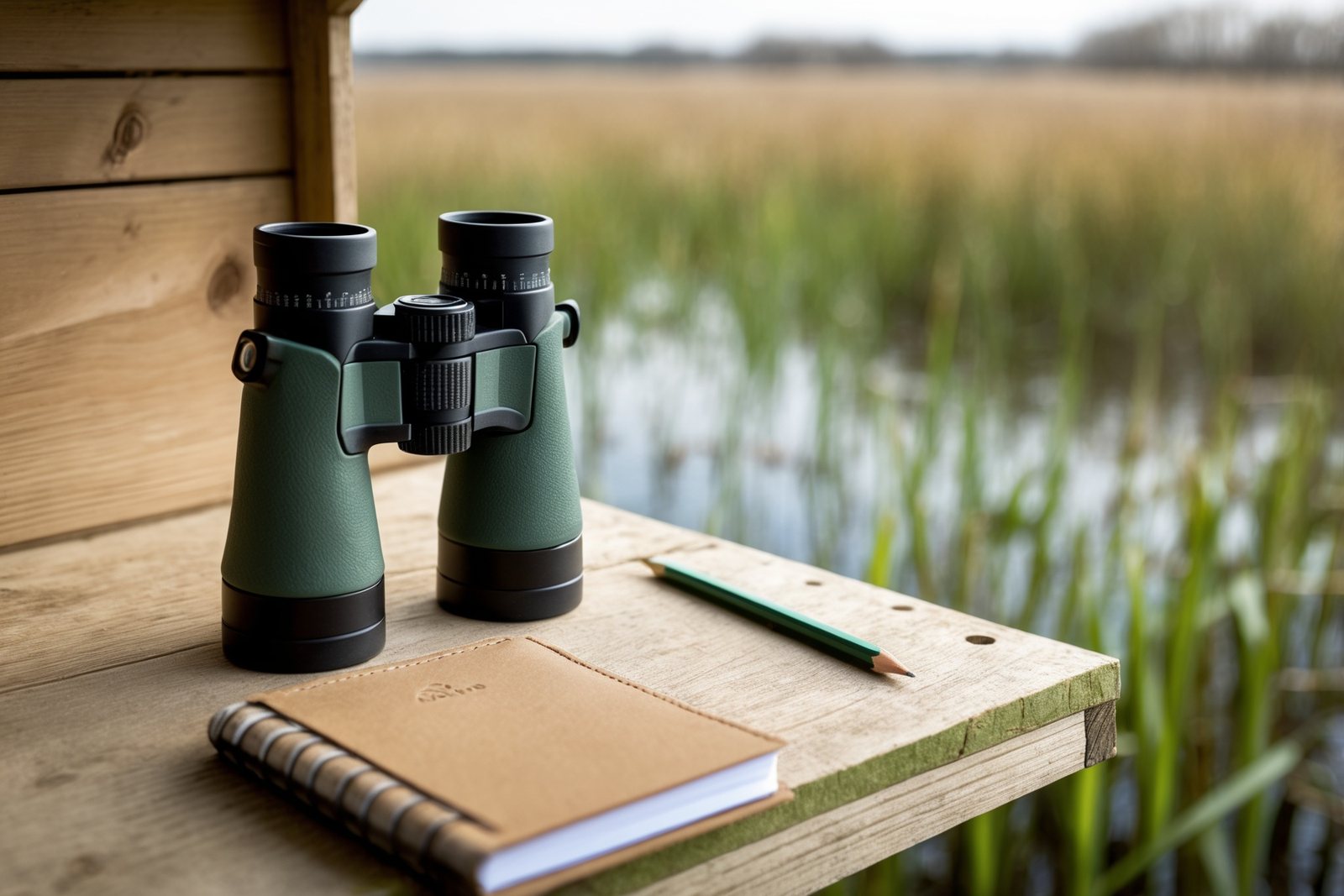
You can watch garden birds on a feeder with the naked eye, but binoculars transform the hobby. Look for roof-prism binoculars in an 8x42 or 8x32 specification rather than high-magnification models. Eight-power magnification gives a steady image with a wide field of view, making it easier to find moving birds in branches. Pair your binoculars with an illustrated British bird guide book and a small pocket notebook.
What It Costs
A printed field guide with colour illustrations costs £12 to £20 at any bookshop. Dependable entry-level 8x42 binoculars with multi-coated lenses and waterproofing cost between £85 and £180 in the UK. You do not need expensive optics to enjoy sharp views, though you should avoid £20 bargain binoculars with dim, misaligned lenses. Visiting local parks, woodlands, towpaths, and many nature reserves is completely free.
Good First Projects
Keep a notebook by a window for one month and list every species that visits your garden or street trees. Note what each bird feeds on and whether it feeds on the ground or clings to hanging feeders. Next, learn five common woodland songs in early spring: robin, blackbird, great tit, chaffinch, and chiffchaff. Finally, spend a morning at a wetland reserve with public hides to watch ducks, herons, and waders.
Mistakes to Avoid
Beginners often buy heavy 10x or 12x binoculars that wobble in the hand and have a narrow view. Another mistake is looking down into your field guide while the bird is still perched in front of you. Instead, keep watching the bird for thirty seconds and note its size, bill shape, leg colour, and tail pattern first. Only open your book once the bird has flown out of sight.
From the blog
- How to Start Watching Birds in Your Local Area — You do not need to travel to remote coastal reserves to enjoy birdwatching. Learn how to spot, identify, and support birds right from your window and local park.