
What It Is
Britain has one of the finest networks of public rights of way in the world. Footpaths and bridleways stretch across lowland farmland, canal towpaths, coastal cliffs, and open moorland. Walking and hiking as a regular hobby means moving beyond short pavement strolls to planned half-day and full-day routes. Learning to read a paper map and dress for changeable weather turns any free Saturday into a rewarding day outdoors.
What You Need to Start
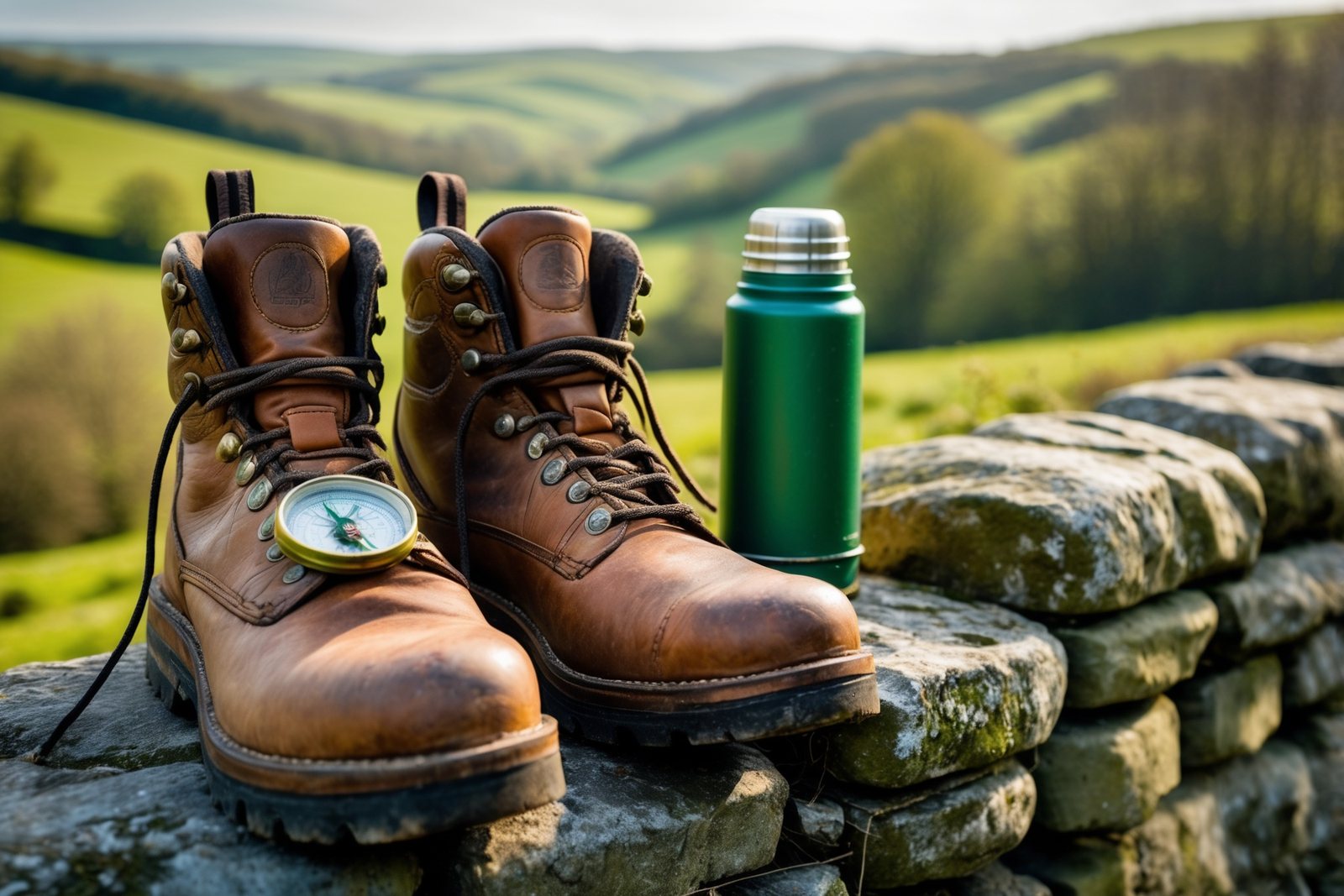
Your feet come first, so wear well-fitting walking shoes or mid-height boots paired with cushioned wool-blend socks. Dress in thin layers — a breathable base layer, a warm fleece, and a waterproof jacket with taped seams. Avoid heavy cotton trousers or jeans, which hold rain and chill your legs quickly. Carry a 20-litre daypack containing water, food, a small first-aid kit, a whistle, a headtorch, an Ordnance Survey Explorer map, and a compass.
What It Costs
If you already own a waterproof coat and sturdy trainers, local dry-weather walks on level towpaths cost only your bus or rail fare. Investing in waterproof footwear, wool socks, a daypack, and a paper map for year-round country walking costs roughly £110 to £220. Ordnance Survey Explorer maps (1:25,000 scale) cost around £10 to £12 each and cover hundreds of miles of local footpaths and bridleways.
Good First Projects
Start with a five-mile circular walk from your front door or a nearby village station using footpaths marked on an Explorer map. Next, walk a ten-mile stretch of a canal towpath or disused railway trail, where navigation is simple and gradients are gentle. Once your boots are properly broken in, plan a six-mile circular hill walk with 250 to 300 metres of steady climb.
Mistakes to Avoid
Setting off on a ten-mile country walk in stiff, brand-new boots without wearing them on short local trips first causes painful blisters. Relying solely on a smartphone for navigation is another common hazard in the countryside. Phone batteries drain fast in cold wind, and mobile signal often vanishes in deep valleys. Always carry a paper map and compass, and check the sunset time before setting off in autumn or winter.
From the blog
- Planning Your First Ten-Mile Day Walk — Moving from an hour's stroll to a full ten-mile circular walk takes a little route planning, sensible pacing, and basic map skills.