
What It Is
Woodworking at home means shaping, joining, and finishing timber to make practical objects for your house or garden. For most beginners, hand-tool woodworking is the safest and quietest way to start. You do not need a workshop full of noisy stationary machinery to make sturdy shelves, boxes, or planters. Working with a saw, a plane, and a few chisels teaches you how timber behaves while keeping dust low.
What You Need to Start
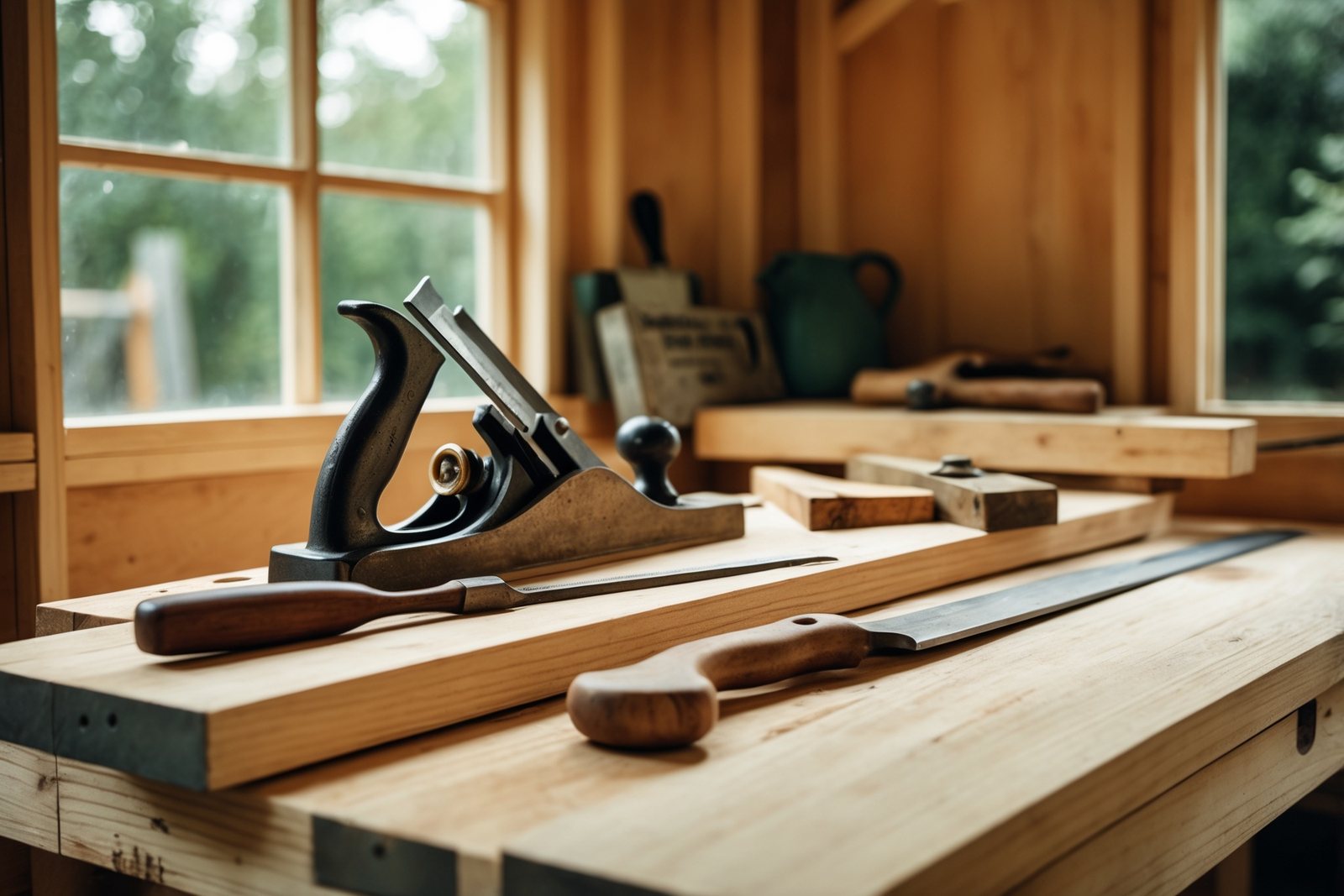
Skip large multi-piece tool chests and buy six dependable hand tools instead. Start with a hardpoint panel saw or tenon saw, a number 4 smoothing plane, and a 150mm combination square. Add three bevel-edge chisels in 6mm, 12mm, and 19mm widths (1/4 inch, 1/2 inch, and 3/4 inch). Finish your basic kit with a marking knife, a pair of F-clamps, a sharpening stone, PVA glue, and abrasive paper.
What It Costs
A sensible starter toolkit in the UK costs roughly £90 to £160 if you buy mid-range new tools. That budget includes a basic double-sided diamond sharpening plate and a simple honing guide. Second-hand planes and chisels from local markets cost less, though they often need flattening before use. Planed softwood timber from a local timber merchant costs around £15 to £30 for a first small build, which beats DIY superstore prices.
Good First Projects
Begin with small, forgiving items that teach you to measure, mark a square line, and saw straight. A bench hook — a simple wooden jig that holds timber steady while you saw — is the classic first build. After that, try making a stout wooden toolbox or a kitchen chopping board in close-grained hardwood. A slatted hallway shoe rack joined with screws or dowels is another practical weekend project that puts every core skill to use.
Mistakes to Avoid
The biggest mistake is buying cheap electric power tools before learning how to mark and cut straight by hand. Another common trap is trying to work with blunt chisels or plane irons straight from the box. Even brand-new cutting edges need honing on a stone before they will pare wood cleanly. Finally, always measure from one marked reference face and edge rather than trusting factory-cut timber to be perfectly square.
From the blog
- How to Read a Woodworking Cut List — Cut lists save timber and prevent costly sawing mistakes, provided you understand nominal versus finished sizes and grain direction.
- The Five Hand Tools Worth Buying First — You do not need a garage full of machinery to start making things from wood. Here are the five core hand tools that handle almost every beginner project.