
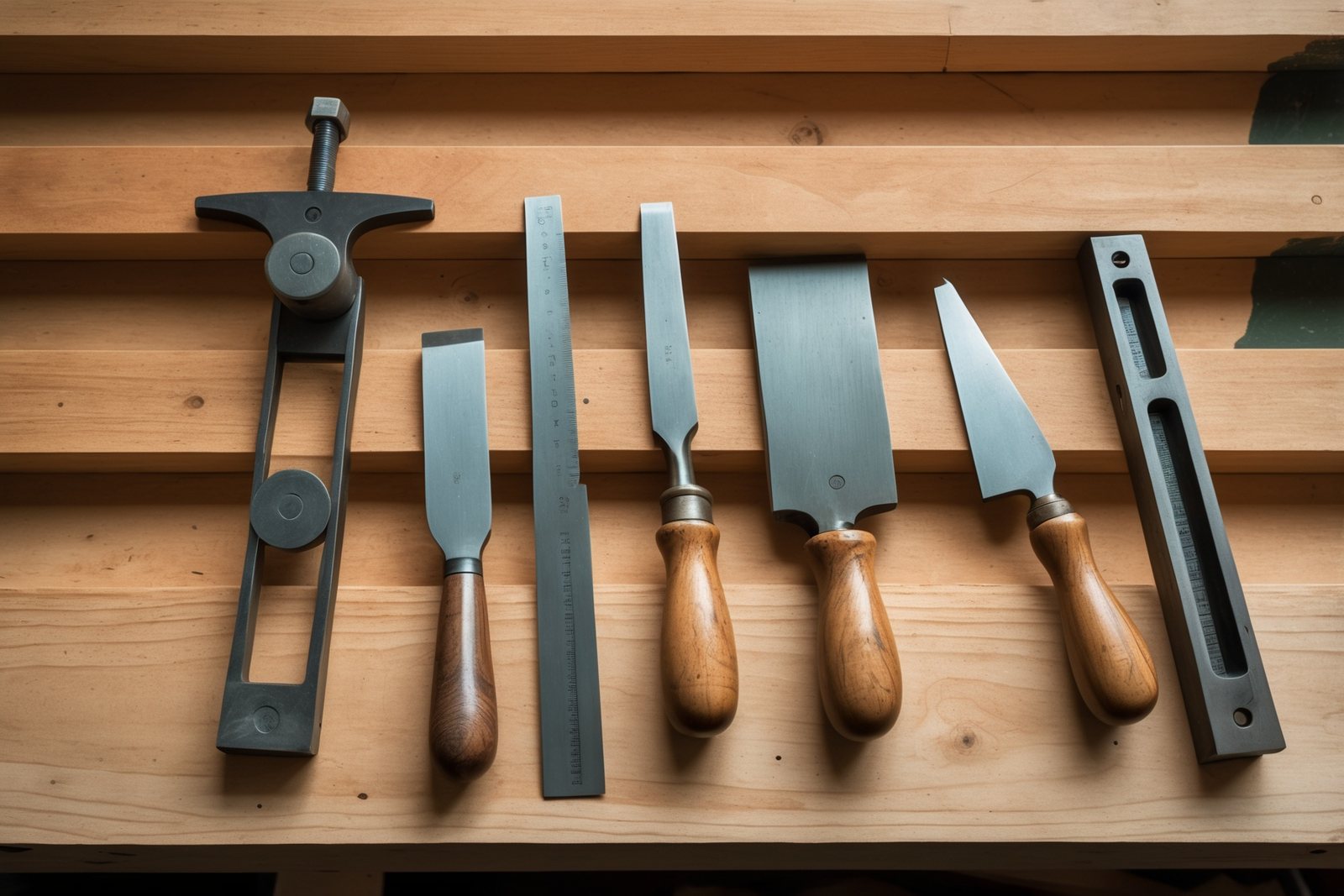
Walk into a large tool shop or browse a woodworking forum and you might think you need expensive machinery. Tablesaws, routers, dust extractors, and racks of twenty matching chisels dominate the conversation. For anyone working in a spare room or small garden shed, that approach is too noisy and dusty. It also costs far more than a beginner needs to spend.
Traditional hand-tool woodworking offers a much calmer starting point for beginners. With five well-chosen hand tools and a sturdy bench or pair of trestles, you can build small household projects. You will spend your budget on dependable steel rather than noisy motors, and your skills will grow steadily.
1. A 150mm Combination Square
Accurate woodwork begins at the marking stage, long before a saw tooth touches timber. If your layout lines are crooked, even the sharpest saw in the country will produce a crooked joint. A 150mm (6 inch) combination square sits neatly in an apron pocket while handling most bench tasks.
Use it to check that the edge of a board sits at ninety degrees to its face. It also marks square cut lines across narrow timber and gauges consistent depths for housings and mortises. Avoid the cheapest pressed-aluminium squares in bargain bins, as their blades often rock out of square. A mid-range engineer's square or cast-iron combination square costs £15 to £30 and stays true for decades.
2. A Marking Knife
Beginners naturally reach for a carpenter's pencil to mark cut lines on softwood. However, a standard pencil lead draws a grey line nearly a millimetre wide. When you cut two mating pieces of wood, that millimetre creates an obvious gap in the joint.
A bevelled marking knife slices a crisp, hair-thin line directly across the wood fibres. Better still, that incised groove gives your saw teeth or chisel tip a physical wall to register against. Any sturdy craft knife or single-bevel striking knife costing £10 to £18 will improve your joinery.
3. A Hardpoint Panel Saw and Tenon Saw
Sharpening traditional handsaws is an enjoyable skill to learn later, but you need not master saw filing first. A modern hardpoint panel saw with fine teeth (around 10 to 11 teeth per inch) costs £10 to £15. It will crosscut and rip softwood cleanly straight out of the cardboard sleeve.
For finer bench work and joinery cuts, pair it with a heavy brass-backed tenon saw around 250mm long. When sawing, grip the handle lightly rather than squeezing it in a tight fist. Keep your wrist and forearm lined up behind the blade, and let the weight of the saw cut.
4. Three Bevel-Edge Chisels and a Sharpening Stone
Hardware stores love selling wooden presentation boxes of eight or ten chisels that mostly stay untouched in the lid. In practice, three bevel-edge bench chisels — 6mm (1/4 inch), 12mm (1/2 inch), and 19mm (3/4 inch) — cover beginner jobs. They handle paring end grain, chopping out hinge recesses, and cleaning the bottoms of housing joints.
Crucially, even brand-new chisels leave the factory with machine-ground bevels that are not yet truly sharp. Budget £20 to £35 for a double-sided diamond sharpening plate (such as 400 and 1000 grit) and a strop. Spending ten minutes flattening the back of a £10 chisel and honing the bevel makes it cut cleanly.
5. A Number 4 Smoothing Plane
A cast-iron number 4 bench plane is the quiet workhorse of the small shed. Even when you buy planed softwood from a timber merchant, boards carry faint machine ripples and minor twists. Once honed and set for a thin shaving, a number 4 plane trims proud joints and squares board edges.
If you want ready-made cutting diagrams once your toolkit is assembled, see our balanced overview of TedsWoodworking to decide whether a large plan archive suits you. For full starter budgets, timber buying tips, and free learning links, visit the Woodworking guide in our Hobbies Directory.