
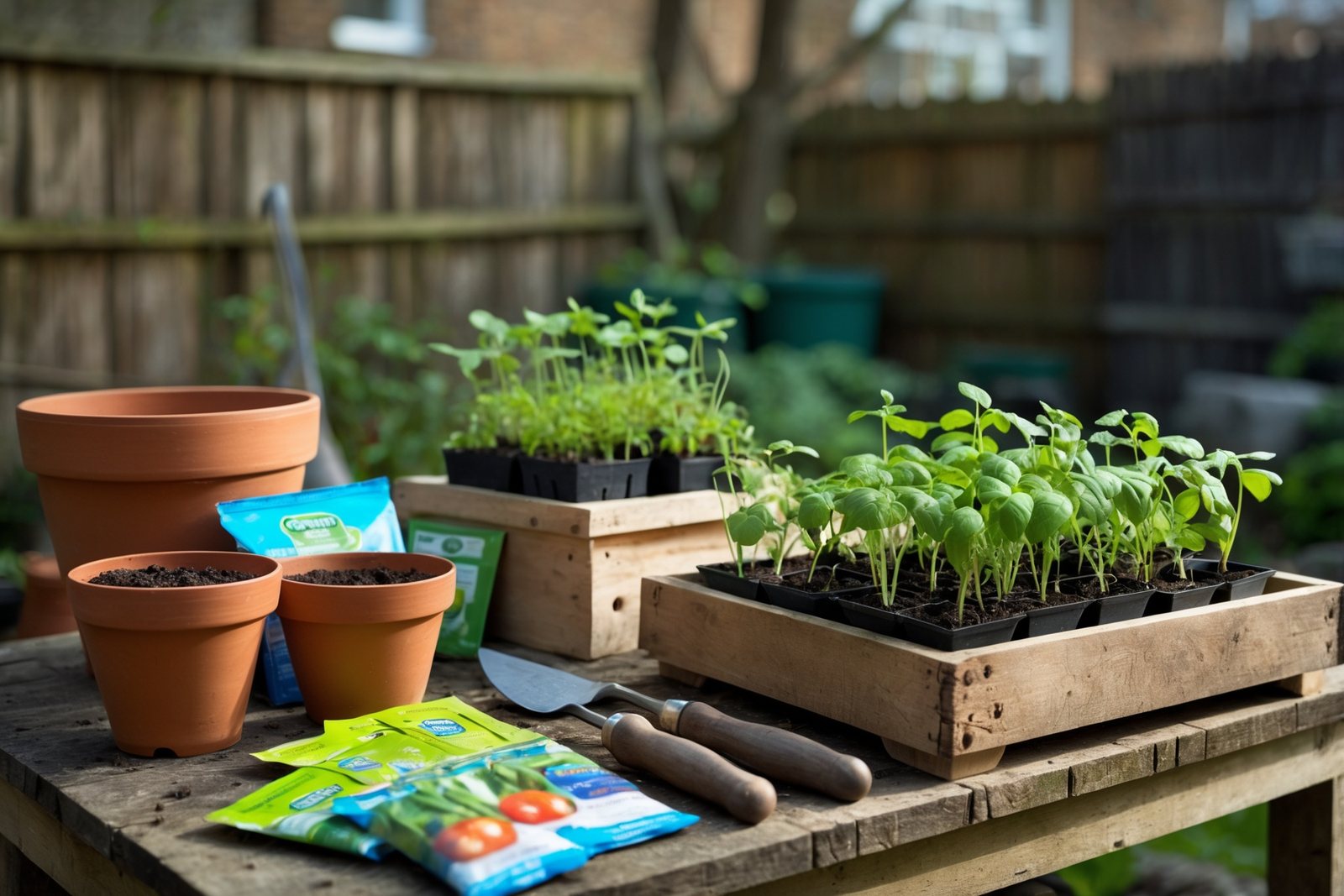
Walking into a large garden centre on the first sunny Saturday in April can quickly empty your wallet. Trolleys fill up with mature shrubs in five-litre pots, glazed planters, specialist feeds, and tools you rarely touch. By Sunday evening it is easy to have spent two hundred pounds without a clear plan.
Good gardening moves at a much calmer, slower pace. Whether you have a small terraced back garden, a rented patio, or a single border, start by observing the space. Spending your first month checking light levels and raising plants from seed or small pots keeps costs low.
Watch the Sun Before Buying a Single Plant
Every plant label mentions full sun, partial shade, or full shade, yet most householders only guess where the sun lands. Before buying anything, pick a bright day and sketch a rough plan of your outdoor space.
Check where the sun and fence shadows fall at nine in the morning, one in the afternoon, and five in the evening. A border that receives six or more hours of direct summer sunlight counts as full sun, suiting lavender, rosemary, and tomatoes. Areas getting three to five hours count as partial shade, which suits hardy geraniums, mint, and leafy salads. North-facing walls remain in full shade and suit ferns, foxgloves, and spring bulbs.
Test Your Soil With Your Hands
If you are planting into borders rather than pots, you do not need laboratory kits to understand your soil. Dig up a small trowel-full of damp earth from ten centimetres down and roll it between your fingers.
- Sandy soil feels gritty, falls apart when you open your hand, and drains very fast. It warms up early in spring but needs regular watering and plenty of organic matter.
- Clay soil feels smooth and sticky when wet and rolls into a firm ribbon. It holds nutrients well but turns waterlogged in winter and bakes hard in dry summers.
- Loam sits comfortably in the middle, holding moisture while crumbling easily in the hand.
Whatever soil type you have, the single best improvement is spreading a five-centimetre layer of garden compost or well-rotted manure. Lay this mulch down over the surface in autumn or early spring and let earthworms draw it into the ground.
Buy Seeds, Small Pots, and Bare-Root Plants
Mature plants in two-litre or five-litre plastic containers are the most expensive way to fill a garden. Large pots cost nurseries money to heat, water, and transport for a year or two. Smaller plants often establish faster in your garden anyway because their roots have not coiled tightly inside a pot.
To keep your budget under control, rely on three thrifty ways to buy plants. Each method gives you dozens of healthy plants for the price of one large shrub:
- Seeds: Hardy annual flowers like calendula and nasturtiums, plus easy vegetables like radishes and salad leaves, cost £2 a packet.
- Nine-centimetre pots: Many nurseries sell young perennials in small square pots for a third of the price of large containers.
- Bare-root plants in winter: Between November and March, dormant roses, hedging plants, and fruit bushes are sold without soil at low prices.
Choose Generous Containers for Patios
If you garden entirely in containers on a patio or balcony, resist buying clusters of tiny fifteen-centimetre pots. Small pots dry out within hours on a breezy June afternoon and overheat plant roots. Instead, choose two or three deep containers — at least thirty to forty centimetres wide — filled with peat-free compost.
Larger volumes of compost hold moisture much more steadily and give roots room to grow strong. Mix a handful of horticultural grit into the compost when planting perennial herbs to improve winter drainage. To see our full starter tool checklist, rough UK costs, and links to free horticultural charities, visit the Gardening page in our Hobbies Directory.