
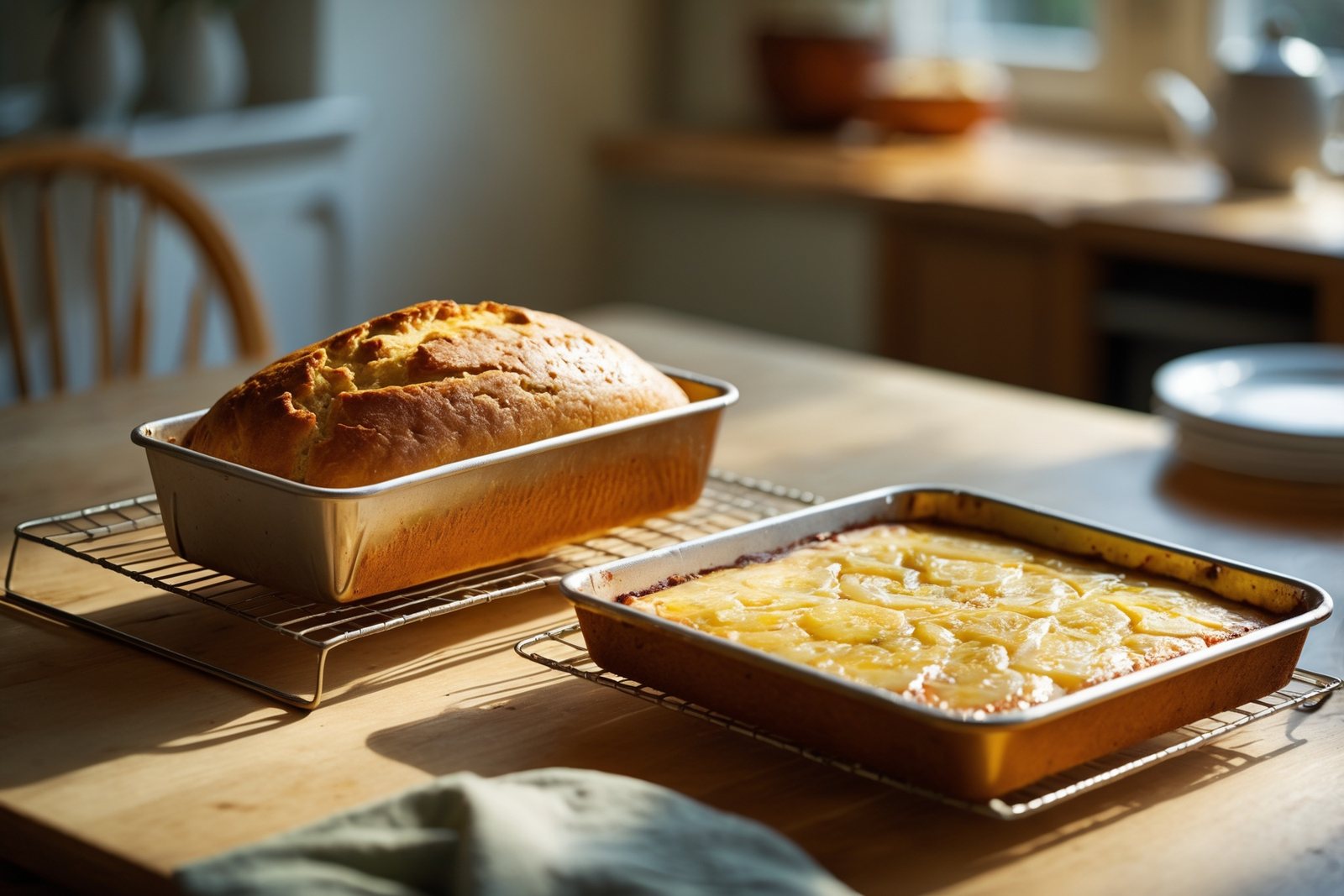
Much of modern food writing makes home baking sound like a laboratory exam. Beginners are told they must maintain a bubbling sourdough starter, buy cast-iron pots, or whip Italian meringue first. It is no surprise that many people try one over-complicated recipe, pull a dense loaf from the oven, and give up.
In a normal domestic kitchen, the best way to learn is through two forgiving British classics. A yeasted white tin loaf and a square sponge traybake teach you how flour, fat, sugar, and yeast behave. Neither recipe requires special gadgets or ties you to the kitchen all Saturday.
Why Digital Scales Matter More Than Mixers
Before switching the oven on, set a pair of digital kitchen scales on the counter. You do not need a stand mixer costing hundreds of pounds to make great bread or cake. Your hands, a mixing bowl, and a wooden spoon work fine for weekend baking. What you do need is consistent weight from one batch to the next.
A heaped tablespoon or measuring cup of flour can vary by twenty percent depending on how tightly it packs. Weighing straight into your mixing bowl in single grams guarantees the same ratio of flour to liquid every time. Pressing the tare (zero) button between ingredients also saves washing up extra measuring jugs.
Building Confidence With a White Tin Loaf
Sourdough is rewarding once you have a feel for dough, but a standard 900g (2lb) white tin loaf is much more reliable at first. Using strong white bread flour and fast-action dried yeast takes the guesswork out of fermentation times. You can mix, knead, prove, and bake a fresh loaf in a single afternoon.
Strong bread flour contains more protein than plain culinary flour. When mixed with warm water and kneaded for ten minutes on the worktop, those proteins link into a stretchy gluten network. That elastic network traps the tiny carbon dioxide bubbles produced by the yeast so the loaf rises evenly.
For a standard 2lb loaf tin, the proportions are easy to learn by heart. Mix 500g strong white bread flour, 7g fast-action dried yeast (one sachet), and one level teaspoon of fine salt. Stir in a tablespoon of oil or softened butter and roughly 310ml of lukewarm water to form a soft dough. Knead for ten minutes until smooth and springy, then cover the bowl until it doubles — usually around an hour.
Once risen, knock the air out gently with your knuckles on a lightly floured surface. Shape the dough into a snug cylinder to fit your greased tin and let it rise again until it crowns the rim. Bake at 220°C (200°C fan) for thirty minutes until golden brown and hollow-sounding when tapped underneath.
The All-in-One Weekend Traybake
While bread teaches you how gluten develops through firm kneading, cake baking teaches the opposite lesson. Once flour meets wet ingredients in a sponge batter, mix as gently and briefly as possible so the crumb stays tender.
A 20cm square traybake tin is much easier to manage than a pair of round sandwich tins. Because the batter spreads into an even, shallow layer, it bakes evenly from edge to centre without cracking. Take your butter and eggs out of the fridge an hour beforehand so they reach room temperature. Cold eggs added to creamed butter and sugar cause the mixture to curdle, which stops the batter trapping air.
Fold in your self-raising flour gently with a metal spoon or spatula until the last dry streaks disappear. Smooth the mixture into your parchment-lined tin and keep the oven door shut for the first twenty minutes. For a full list of essential tins, starter budgets, and trusted recipe archives, visit the Home Baking guide in our Hobbies Directory.